Showing posts with label Nissan. Show all posts

2013 Nissan Leaf

ymku.blogspot.com - New York Mayor Michael Bloomberg, has a view on the future of mass transportation in the city. Bloomberg wants at the end of the next decade all taxis have to use electricity.

The policy was immediately greeted warmly by one of the biggest manufacturers in Japan, Nissan, which already has a line-up of electric-powered variant.

Autoevolution reported (4/23/13), Nissan has just announced six models has provided Leaf EV (Electric Vehicle). Leaf was appointed as a volunteer for a year in a pilot program.

Taxis normally operate 24 hours a day. Surely it would be interesting Bilam enyoroti major problems on the electric car, the battery charging process, especially as a means of transportation such as taxis.

"As part of our commitment to zero emission vehicles in the global market, Nissan is looking for ways to take advantage of electric cars, including application to the cab. Continuing from Nissan NV200 selected option as the Taxi of Tomorrow New York, our relationship with the city allows to simultaneously perform Leaf taxi testing and further developing electric vehicle technology for applications in the future, "said Joe Castelli, vice president, Nissan Commercial Vehicles.

"Although this model cab will not pave until the next six months, we attempt to predict the future in the form of a taxi. Traces career Nissan on electric vehicles make us the leading answer important questions about making electric cars as part of a fleet of taxis, so in the year 2020 we were able to reach a third of the taxi cab that is circulating electricity, "explains Michael Bloomberg.

Nissan Leaf named European and World Car of the Year, recorded a 89% rating in adult occupant safety, 83% to 84% of child protection and safety systems on-board, which includes an Electronic Stability Control (ESC) and a speed limiter as a standard feature. The car also gets 65 percent rating for pedestrian safety.

The battery system is activated when the vehicle crash simulations performed. The goal is to test the safety of electrical systems, including automatic disconnect system during an accident. Nissan says that the system is working perfectly. Car batteries are placed in the compartment under the floor, not affected by the accident.

"Nissan LEAF proves that Evs can achieve the same security level with the car in general. Standart is now made to the next-generation cars like the cars in the European market," said Euro NCAP Secretary General, Michiel van Ratingen.

Latest Results Euro NCAP crash test can also be seen on the new Ford Focus, Citroen DS4, Lexus CT200h, Peugeot 508 and the latest Volvo V60, which also received the highest rating of 5 stars. Focus gets special praise for the security features Active City Stop and Lane Keeping Aid her, while Volvo once again emphasized their commitment in the field of safety through ESC V60, alarm seat belt usage and speed limiting devices, which make these vehicles get high marks


.

2012 Nissan TeRRA Concept | Car Picture, Specification, Review and Another New Car Release


Automotive manufacturer's country of origin Sunrise, Nissan leaked teaser photos of the futuristic concept car nicknamed Terra ready mendebut Paris Motor Show 2012 at the end of the month.From the teaser photo shown, clearly implied if Terra body adopting such Juke crossover, of course with a more futuristic touch. Style of science fiction-style look of the future vehicle applications blue accent panels, such as headlamp, foglamp up to the bumper panels, fenders and roof.While at the Nissan grille emblem pinned just put on the line chrome angular shape of the letter U. In addition, the narrow headlamp design, fog lamp and crystal blue beautify the front display. From the side, looks sexy curve of the body, such as the Juke. The difference, Terra appears attractive to use suicide doors.Moving on to the legs, there is a unique rim with a design similar to a propeller with two tone color blend. And the futuristic feel of the thick with the dominant color of silver with blue accents in the entire body is Terra.So the cabin innards Terra. Style of science fiction films such as aircraft in Star Wars or Star Ship Troopers look thanks to shades of gray and wood panels with a unique curve. Then form a unique steering wheel also blends nicely with the LCD panel replacement speedometernya instruments.Remarkably, Terra claimed to have zero emissions or no emissions at all. It is thanks to the power source-based Terra hydrogen fuel cells, electric vehicles (FCEV). Surely FCEV applications into separate note, where Nissan currently has released an electric car (EV) mass production, Leaf.Unfortunately, until the veil was opened on 29 September, Nissan still keep meeting detailed specifications of Terra.Nissan ready to give a surprise at the Paris Motor Show 2012 to present Terra Fuel Cell Electric Vehicle (FCEV), a concept cars zero-emission SUV. Not much information that comes out, but when viewed from the stature, terra more or less took the Juke design with futuristic style bandage.Most identical look at the bulging body and round headlamps located in the bumper and the hood light horizontal models. Similarly, the size of the side glass that size is not so high. Some parts of body in blue paint to accentuate the impression of environmentally friendly cars such as the Leaf. Uniquely, the system uses a gaping opening doors (suicide-doors) in the absence of B-pillar that is rarely used for the SUV.The interior space also provides a touch of Desan futuristic dashboard and upholstery. Among pointer instrument panel engine speed (rpm) and speed using a monitor like the iPad which is right behind the steering wheel. Front seat rails back and forth has to share a room and gives passengers access to the rear entrance.
 
ensure has yet whether this is going to replace the SUV Xterra that has been in existence in the SUV segment since 2005. Detailed information will be present at the exhibition held later this month.Not to be outdone by other manufacturers that present models of eco-friendly, for the event the Paris Motor Show 2012, Nissan brought the concept of power UV Sport named Terra. And images of a more appropriate concept in the crossover genre has emerged in the virtual domain before its debut later this month in Paris.Listening from the pictures, looks Terra Concept looks like a mix between Nissan Leaf hatchback and Rogue crossover model, the Juke, by combining posture an SUV. Unlike the Leaf uses lithium-ion batteries to drive electric engine, Terra is sbuah Fuel Cell Electric Vehicle to adopt hydrogen to supply electrical power to the machine.The technology is already familiar to Nissan. Because in 2008, the country's manufacturing sunrise is already bearing hydrogen-electric version of the Nissan X-Trail. To test the prototype models, Nissan menghelat testing at Nurburgring, Germany. So, just wait for the latest news from Terra later this month.Nissan Terra FCEV (Fuel Cell Electric Vehicle) wed 2 power Nissan during this: SUV and EV (Electric Vehicles). Nissan Terra has a capacity of 4 � 4 is powered by a fuel cell electric and athletic design radiates behind her little body (compact).As we know Nissan is very successful with such crossover Juke, Qashqai. So it is with great Nissan Nissan LEAF.Terra is designed as a functional and flexible car for young people in the future, and always active. U
 

The two front wheels are driven by electrical propulsion systems such as the Nissan LEAF. In each of the rear wheels are available as an electric motor contained in the family Pivo concept. Under the front bonnet resides a hunk of hydrogen fuel cell 2.5 kW / L.Terra purely a concept. But Terra signals that Nissan is ready to enter the era of FCEV if mass-produced.Well, ... the manufacturer Nissa was also participated in making energy-efficient cars and zero emission ...!! Yup ... the car is being developed using the battery ... If you see the model is similar to the type of his Nissan Jukebox ...!! These cars use a 4 � 4 hydrogen fuel cell electric vehicle concept ... and this car had 4 seaters ...!! This car has electric propulsion motors 3 units ... one in front and two behind ...!! : D
 
The technology used Fuel Cell Electric Vehicle (FCEV), in which his own cell consists of the electrolyte, anode and cathode ...!! It functions much like the battery ... but the technology is not needed as battery charging ... but need hydrogen ...!! This technology is actually not new as well ... already in 1959, even in 1966, GM has been using this technology Electrovan ...!!Nissan Teraa possessed wood interiors ... and tablet models indicatornya panel that can be removed aka removable ...!! Yaaagh, ... in addition to providing information about the velocity (speed) and other information ... also the driver to easily connect to a variety of instrument panels, communications, navigation, etc ...!! So ... this car was designed very futuristic ...!! Deeegh not know when this car will be mass produced ... but anyway, ... it could be feasible if the price of fuel can not be arrested ... yaaagh energy-efficient vehicles so the choice

Nissan India-sales up 149 percent


Nissan India has reported a staggering 149 percent increase in its sales in the month of November 2011.
The Japanese car manufacturer says that this major sales growth was driven by the recently launched Sunny saloon which accounted for 1131 units of the figure for November and has already achieved sales of more than 3130 units since its launch in September.
Nissan�s other offerings like the Micra hatchback accounted for 1514 unit sales in November, which is a 47 percent increase compared to the same period in 2010. The X-Trail SUV, Teana saloon and 370Z sportscar comprised the remaining sales.
Mr Kiminobu Tokuyama, Managing Director of Nissan Motor India Pvt. Ltd. said, �Achieving this level of sales performance in the current difficult market conditions in India reflects Nissan�s growing popularity in the Indian market. The locally manufactured Sunny and Micra give a great impetus to our continued growth in India, and we are confident of accelerating this journey much faster in the coming months.�
Mr Dinesh Jain Chief Executive Officer, Hover Automotive India (HAI), Nissan�s sales and marketing partner in India, said, �Acceptance of Nissan models by customers in the most turbulent of economic conditions shows that customers� preference towards the Nissan brand is growing day by day.�
Nissan has over 47 dealerships nationwide and customers can avail round-the-clock assistance and a portfolio of customer care and service schemes including extended warranty options and roadside assistance for all Nissan products sold in India. 

Nissan Silvia

The Nissan Silvia is the name accustomed to the company's long-running band of action coupes based on the Nissan S platform. Although contempo models accept aggregate this anatomy with added cartage produced by Nissan (most conspicuously the European 200SX and North American 240SX in the S13 and S14 generations, and 180SX in the Japanese market), the name Silvia is not changeable with the anatomy codes.

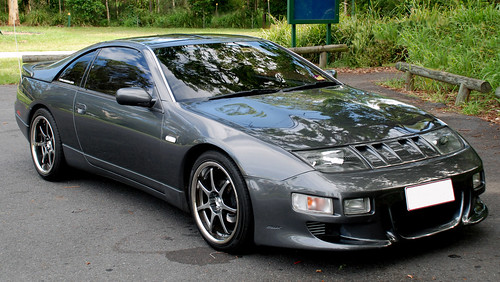
Nissan 300ZX

The Nissan 300ZX (called the Fairlady Z in Japan) is a sports car that was produced by Nissan. It comprises the third and fourth ancestors of the Z-car line-up, appropriately accustomed the anatomy designations Z31 and Z32.The 300ZX name followed the after assemblage accomplished with the 240Z, put alternating by Yutaka Katayama, the one time admiral of Nissan Motors USA. The "X" was added to the archetypal name by its antecedent blame "luxury". The name was acclimated in best markets with the barring of a few including the Japanese home market, there the car like all antecedent Z cars was awash as a "Fairlady Z". The best affairs 300ZX's were the Z31s, with over 100,000 added sales than the Z32.

Nissan Sunny Review, Test Drive


Nissan's all-new Versa is an all-new entry level saloon, built on the same �V� platform as the cute-looking Micra.  The all-new car is a tailor-made assault on the surprisingly similar requirements of car compact saloon buyers in the US, China and even India. Since the Versa name belongs to Maruti in India, Nissan has chosen to badge it the Sunny here.
The Sunny is built to make an impression. It looks quite large, especially when viewed from the rear three-quarters, with its big boot, long wheelbase and massive cabin. It�s closer in size to something like a Civic or a Laura; compact it is not. Although based on the same platform as the Micra, the Sunny looks nothing like it. Only the Nissan badge appears to be common.
�V� for Versatile
Clearly, Nissan�s new �V� or versatile platform can accommodate both compact and medium-sized cars. Platform cost saving aside, Alliance partner Renault shared parts, know-how and even helped with sourcing parts for the Sunny. The platform uses 20 percent fewer components and has knocked 100-odd kilograms off the scale.
Style and space
The Sunny doesn�t look boxy or cheap. Long flowing lines, a beautifully crafted nose and an elegant rear section mean the new Sunny actually looks very attractive from many angles. Sure, the stubby nose means some of the proportions are a bit odd. And from the rear it looks like a baby Nissan Teana!
The Sunny boasts of a Corolla Altis-sized wheelbase and that translates into a lot of room on the inside. In fact the comfy backseat has more legroom than a Mercedes E-class! The drooping roofline, however, means that you sit slightly lower than is ideal and the backrest is leant back a bit. And the front seats, if anything, are even more comfortable, with thigh support and side bolstering both very impressive.
Nissan has tried very hard to make the cabin look upmarket as well. The chrome-ringed dials, the silver accents on the steering wheel, and the Micra-like chrome door handles give the ambience a bit of a lift. Overall plastic quality and fit and finish are also up to expectations. A few cheap plastic bits like the air-con controls and window switches do exist. And at 420 litres, the boot is pretty large.
Big-car dynamics
The US-spec Sunny comes with a new-generation 1600cc petrol motor. Producing a useful 109bhp, it makes more than sufficient power, and initial responses to the throttle are very good too. For the Indian market, however, the Sunny will come with a smaller 1.5-litre petrol developing 107.5bhp.
The engine feels nice and smooth and there�s enough performance, there isn�t too much grunt in the midrange. Downshift and you�ll find there�s plenty of punch in the top end, but the motor does get a bit vocal. On the gearbox front, the CVT is surprisingly good, with very little rubber-band effect present and the ability to hold engine rpm in the sweet spot. Meanwhile the five-speed manual has a crisp shift and is both light and effort-free to use.
Despite a bit of pitter-patter at low speed due to stiff damping, the Sunny�s ride quality is excellent especially once the car is up to speed. Road noise is reasonably well contained for a car of this price, bump absorption is first rate and because of the long wheelbase there isn�t too much pitching and bobbing either. It really does ride like a big car.
Also impressive is stability and handling. The Sunny tracked straight and true even at speeds as high as 140kph, with only a light grip needed on the wheel. Nissan has also done an outstanding job with the brakes. The electric power steering is both accurate and well weighted, unlike many such systems. Although, the Sunny is nice to drive and does everything you ask of it, it�s not a car that encourages you to drive it faster. 
The Sunny is a car that has almost everything Indian customers want. It looks large and attractive on the outside, is extremely spacious and comfortable inside, rides, performs and drives well and feels robustly engineered too. Nissan will have a more powerful version of its 1.5-litre diesel that powers the Micra on sale soon. With the right price the Sunny has the potential to shake up the competition. Here�s a car worth waiting for.  

Nissan Develops Car With Vitamin C


Nissan engineers say they want drivers to feel more healthy living in the car, not outside.

Nissan recently announced it has successfully developed the future car which can pump up vitamin C in their cabin. This would allow the driver and passenger skin moisture is maintained.

New cars are equipped with Plasmacluster ion concentrations developed by Sharp. Of course, these ions which will help maintain natural skin moisture.

Nissan said the Plasmacluster ion can help reduce bacteria in the air, kill bacteria and microbial allergens in the cabin.

This system will also be able to detect various odors, such as animal odors and other foul odors. This air circulation system automatically switches over ventilation if necessary.

Nissan's hybrid car fugue has been using the "AC Forest". Air conditioning system is designed to refresh the wind, temperature, and humidity. A Nissan engineer said, "We want drivers to feel that they are healthier to live in the car, not outside."

Japanese carmaker also plans to install anti-collision technology that will automatically detect if there is a risk of hitting cars or pedestrians in front of him.

This system involves a camera screen and an alarm that sounds when the pedestrian is too close to the car. Nissan claims that the technology "speedometer friendly" is able to prevent the collision at a speed of 64 km per hour.

Nissa is currently developing "friendly speedometer" that will remind you of a wedding anniversary or birthday friend.

Nissan will also develop the hot seat that combines NASA research to improve blood circulation better and reduce the likelihood of back pain during long trips. "the emotional aspect of the car becomes increasingly important," said the engineer.

Nissan Build minicar Together with Mitsubishi


Nissan and Mitsubishi agreed to create a joint venture to produce this car.

Nissan Motor Co. and Mitsubishi Motors Corp. has agreed to establish a joint venture company which will focus on planning and product development mini car. This step is a continuation of their agreement in December 2010.

"This is a collaboration to expand the scope of cooperation between the two companies," said Nissan, as quoted by autoevolution, Monday, May 23, 2011.

However, this joint venture will face the tough challenge of Toyota Motor Corp. has also announced the entry in the mini car market at the beginning of this year.

Unfortunately, Nissan does not mention details about the project. However, news of a growing, Nissan and Mitsubishi will begin producing this mini car in 2013.

Nissan predicts in the near future minicar segment will increase and reach half of its market share. In the last year, 20 percent of Nissan sales seconded by minicar.

Nissan Skyline GT-R


The Nissan Skyline GT-R is a Japanese sports car based on the Nissan Skyline range.

The aboriginal GT-Rs were produced from 1969-1977. After a 16 year aperture back the KPGC110 in 1972, the GT-R name was active in 1989 with the Skyline R32. This car was nicknamed "Godzilla" by the Australian motoring advertisement "Wheels" in its July 1989 edition, a name that sticks to this day. The R32 GT-R bedeviled the motorsport in Japan, acceptable 29 beeline victories out of 29 races. The GT-R proceeded to win the JGTC Group A alternation championship 4 years in a row, and additionally had success in the Australian Touring Car Championship acceptable from 1990�1992, until the GT-R was banned in 1993.[1] The Skyline GT-R (R33) was additionally the aboriginal assembly car to lap the allegorical N�rburgring in beneath eight minutes.

The Skyline GT-R became the flagship of Nissan performance, showcasing abounding avant-garde technologies including the ATTESA-ETS 4WD arrangement and the Super-HICAS four-wheel steering. The GT-Rs remained bargain compared to its European rivals, with a list-price of �4,500,000 (US$31,000). Today, the car is accepted for acceptation Drag Racing, Circuit Track, Time Attack and contest hosted by affability magazines. The GT-R is the champ in the 2007 Tsukuba Time Attack captivated in Japan�the M-Speed GT-R (9 out of the top 15 cars consists of GT-Rs). Assembly of the Skyline GT-R concluded in August 2002. The car was replaced by the GT-R, an absolute agent not awash as a Skyline.

The Skyline GT-R was never bogus alfresco of Japan, and the sole consign markets were Hong Kong, Australia and the UK, in 1991, and New Zealand as acclimated Japanese imports. Despite this the car has become an iconic sports car, including in countries from the Western Apple (mainly the United Kingdom, Australia, New Zealand, Ireland and Canada). It has become notable through pop ability such as cinema and video amateur like The Fast and the Furious series, Initial D, Wangan Midnight, and Gran Turismo.

The car was called by BBC's Top Gear as the alone accurate Japanese addition in the band of supercars.[6] The car was additionally called by the capital presenter of the show, Jeremy Clarkson, as one of the best cars in the world.

Nissan 370Z


The Nissan 370Z (known as the Fairlady Z in Japan) is a sports car bogus by Nissan Motors. It was appear on October 29, 2008 and was aboriginal apparent at an accident in Los Angeles advanced of the 2008 Greater LA Auto Show, afore actuality clearly apparent at the appearance itself. The 370Z is the sixth-generation of the Nissan Z-car line, afterwards the 350Z.

Almost every allotment and basic of the 370Z has been redesigned from the antecedent archetypal (350Z). It is powered by the VQ37VHR 3.7 L (230 cu in) DOHC V6 with Variable Valve and Lift Control and produces 332 bhp (248 kW; 337 PS). Power commitment to the rear auto comes through a fresh 7-speed automated chiral with paddle shifters or 6-speed chiral manual which appearance the world's aboriginal synchronized bottomward about-face rev-matching system, SynchroRev Match. The SynchroRev Match arrangement is alone accessible with the sports package. The cogwheel offered with the Sport Amalgamation is adumbrated to be a adhesive bound blooper differential.

Compared to the 350Z, the 370Z has a wheelbase 4 in (100 mm) beneath at 100.4 in (2,550 mm) and an all-embracing breadth 2.7 in (69 mm) beneath at 167.1 in (4,240 mm). The all-embracing amplitude has been added by 1.3 in (33 mm), the rear clue by 2.2 in (56 mm), and all-embracing acme bargain by 0.3 in (7.6 mm). The abate exoteric ambit and use of added failing abstracts advice abate weight. (Although it should be acclaimed that a 2003-2005 abject archetypal 350Z is absolutely lighter in weight than the 370Z). The 370Z appearance a advanced aluminum subframe, aluminum-alloy agent cradle, aluminum aperture panels, an all-aluminum hood, and an aluminum hatch.

Front anatomy bewilderment acerbity is bigger by 10 percent with an abundantly revised anatomy anatomy which includes a fresh advanced abeyance cradle to abate advanced anatomy crabbed bending, fresh rear structural reinforcements, and an underbody "V-bar" to advice abate rear crabbed bending. Additional enhancements accommodate the use of a carbon cilia blended radiator apartment and deepening of the rear fender and bear areas. Rear anatomy bewilderment acerbity is bigger by up to 22 percent and rear anatomy vertical angle acerbity is bigger by up to 30 percent. The fresh anatomy weighs hardly beneath than the 350Z.

The accessory of annoyance is 0.30 and 0.29 with the Sport Package, abstracts identical to the 350Z. Nissan has additionally afflicted the clamp and brakes of the 350Z for the 370Z. The brakes accept been afflicted from the added big-ticket Brembo antagonism brakes to Nissan branded brakes which are bogus by Akebono.

Nissan Navara, 2010

Nissan Navara, 2010


Europe's best selling pick-up and its SUV sibling since its launch - the Nissan Navara and Nissan Pathfinder - have been given a mid-term boost with a number of significant enhancements designed to keep them at the top.


New V6 diesel engine

The new direct injection V6 turbodiesel has been developed by the Renault Nissan Alliance to deliver high levels of performance with strong economy, competitive emissions and class-leading refinement.


The key element of the new V6 - with an unusual vee angle of 65 degrees - is the material chosen for the engine block. Alliance development engineers chose Compacted Graphite Iron (CGI), a material that offers all the benefits of cast iron, including high levels of stiffness and noise absorption, without the weight penalty. And while CGI is heavier than a pure alloy block there is no need to add stiffening ribs or extra sound deadening material so the weight gain is comparatively modest.


Using experience gained during the development of the Alliance 2.0-litre dCi engine - and carrying over some technology - accelerated development of the new V6, but number of significant changes have been made to the hardware for the V9X. The combustion chamber design, for example, has been optimised to improve the balance between emission levels and fuel efficiency.


The compression ratio has been lowered to 16:1 to benefit not just economy and emissions but also noise, vibration and harshness (NVH), while internal engine friction is reduced by the use of ultra smooth components such as the micro-finished forged steel used for the crankshaft.


Class leading levels of torque and highly competitive specific power outputs are delivered thanks to the adoption of a comparatively large single turbocharger, which is mounted within the vee of the engine, an intercooler, and the use of the latest generation of Bosch common-rail fuel injection. This system incorporates piezo injectors and operates at 1800 bar.


Power output is 170 kW (231PS) while the torque output of 550 Nm leads the class. Better still, peak torque is achieved from as low as 1,700 rpm and is available all the way to 2,500 rpm, while as much as 500 Nm is available from a mere 1,500 rpm. Idle speed is an exceptionally low 650 rpm with none of the vibrations and noise usually associated with a diesel.


The result is strong low-end performance with comfortably refined delivery and exemplary throttle response. In addition, the engine helps provide strong towing performance, the Nissan Pathfinder capable of towing a 3500 kg braked trailer with Nissan Navara having a 3000 kg limit.


Emissions and fuel efficiency targets included achieving Euro 5 compliance. In addition to the gains made by the changes to the combustion chamber, the V9X engine also incorporates a number of innovative features.


Among these is the adoption of an overcooled Exhaust Gas Recirculation (EGR) system which reduces NOx emissions. The system incorporates an integrated exhaust gas bypass in the EGR cooler which quickly helps to achieve the optimum temperature after start up so that the full cooling capacity can be used. This features a low temperature water circuit for the EGR cooler to reduce still further the temperature of the exhaust gas and lower carbon monoxide and hydro carbon emissions.


Equally significant is the treatment of the tailpipe emissions. The system comprises a metallic oxidation catalytic converter offering lower pressure loss compared to a ceramic system and an exothermic catalyst and a catalytic diesel particulate filter (DPF) in the same container. The latter arrangement works in conjunction with a seventh fuel injector which is positioned in the exhaust.


Improved 2.5 four-cylinder dCi


The existing 2.5 dCi four cylinder engine hasn't been forgotten, however, and significant improvements will cement its position as the most popular engine in the range with improvements to both overall refinement and all aspects of its performance.


Subtle retuning has seen a useful 11 per cent rise in both power and torque figures to keep the engine at the top of the class. Power rises by 19 PS to 140 kW (190 PS) while torque increases by a healthy 47 Nm to 450 Nm.

As well as delivering performance gains, the changes have seen improvements in fuel economy and lower emissions. Over the combined cycle manual versions use 8.5l/100kms - an improvement of 1.3 l/100kms - while CO2 emissions have fallen by 40g/km to 224 g/km.


Exterior changes


The revised models have been given a new look front and rear to differentiate them from their predecessors. Changes at the front include a new bonnet, revised grille and a new bumper assembly. Adding 80mm to the length of both models, the bumper is more rounded and lends a more sporting touch to the cars.


There's a new headlamp design with distinctive projector styling where Xenon lamps are fitted (Nissan Pathfinder only). Headlamps washers now pop-up from beneath body colour moulding in the bumpers. There's a new 18 inch alloy wheel to complement the existing range of 16 inch (steel and alloy) and 17 inch (alloy) designs. V6 models, meanwhile, are given a discreet V6 badge at the leading edge of both front doors while V6 Nissan Pathfinder also gain a new side moulding across the doors.


Interior changes


Most of the changes inside the cabin of both Nissan Navara and Pathfinder have been designed to boost quality and include new switchgear, revised door trims, new seat fabric, the addition of chrome highlights, revised dials and, depending on the model, the availability of Nissan Connect Premium with a new high resolution touch screen.


Typical of the attention to detail that has helped enhance quality are the door trims which have been changed to improve both the look and feel of the interior and its practicality. The armrests and door pads are more tactile to the touch and their shape has also been altered to make them more comfortable in use.


As well as improving fit and finish, the material used has also been enhanced. Practical touches mean the storage bins can now happily hold an A3 map book as well as a one-litre bottle. The rear door storage bins are now large enough to hold a standard Nissan First Aid kit.


Switchgear changes include a new, easier to use, all-wheel drive command control switch on Nissan Pathfinder while the steering wheel controls for the phone and audio are now illuminated. Chrome finishers have been added to the automatic transmission surround and, depending on the model grade, to the instrument binnacle. There's a new storage box on the centre console with a damped lid while SE and LE versions also benefit from 'Fine Vision Meter' dials with a crisper appearance. LE versions of Nissan Pathfinder now have the option of black or light biscuit leather trim.


Active safety is improved with the availability of Nissan's Electronic Stability Programme (ESP) on Nissan Navara (already available on Pathfinder) which uses sensors to monitor the engine's ECU, wheel speed, steering angle, plus longitudinal and lateral G and yaw rates to anticipate and control wheel slippage.


Nissan Connect Premium, the brand's new integrated navigation, communication and music system is an optional extra. Simple and quick in use, the 40GB hard drive-based system has a high resolution touch screen with a 3D Birdview display while the map coverage is now extended to Russia, Turkey and Eastern Europe. A new intuitive multi-function controller is fitted and the system also incorporates RDS-TMS live traffic updates and rich content from Michelin.

Nissan Cube, 2009

Nissan Cube, 2009


The Characterised by its rounded-off squared dimensions, it's easy to see how Nissan Cube got its name. Boasting bags of character, Cube also sports an asymmetric rear design, with a wrap-around window at the rear on the passenger side, and a pillar on the driver's side, giving a distinctive, striking design signature which is carried over from the previous generation of Nissan Cube.

More than just unique geometry, however, the new Nissan Cube is also conceived as a totally different take on an automobile - a car that doesn't want to be defined as a car.


The Bulldog in Sunglasses

The all-new Nissan Cube builds on the existing DNA characterised by its non-traditional design, with an improved stance and an added sense of dynamic movement. With Cube's long wheelbase relative to its overall length (a 2530mm wheelbase against a 3980mm overall length) and wide track, the wheels, in effect, are pushed out to each corner - providing exceptional space utilisation and a confident-looking stance that is described as a "bulldog in sunglasses."

With its stance, the incognito canine look is aided by the wide headlights and grille treatment, the small but substantial body proportions and the short tail section. In the rear, the bar-type taillights reinforce the wide, anchored feel. The Cube's creators also sought to maintain a sense of pure design, reducing the number of character lines to give simplicity and freshness to the styling.


The other unique aspect of the Cube's exterior is the greenhouse. The A-pillars are positioned far outward and relatively upright, giving a wider range of forward visibility. The front door windows utilize a photo frame design patterned after a personal photo frame, while the asymmetrical wraparound side/rear window creates enhanced rear diagonal visibility for lane changes and reverse parking.

Unlike typical top-hinged or clamshell-style utility rear doors, Nissan Cube features an easy-access refrigerator-style opening, which makes it possible to open or close it even if parked tight against other cars in parallel parking spaces or when backed in against a wall or other obstacle.

The Nissan Cube is available in several eye-catching colours, with evocative names like Witty Military, White Pearl, Sea Turquoise and Bitter Chocolate.

Customers will be able to personalise their Cube, with designs available for the glass roof and also body stickers.


The Casual Loung Interior

The centrepiece of the new Cube's universal appeal is its surprisingly roomy interior that offers room for five in a lounge-like comfort. It creates a highly changeable space - for interacting with friends.

Cube's clever, inspired and surprisingly open occupant space was conceived with a Jacuzzi Curve layout and floating meter pod driver's area. It combines casual lounge-style passenger seating with a relaxed driving experience. The interactive interior is anchored by its curve-themed architecture, such as the subtle wavy shaping of the instrument panel, door panels, seat shapes, and the iconic Water Drop that can be seen in the cupholders and the climate control design. They are inspired by nature and the calming way that ripples move outward from a drop in water.

The comfortable Nissan Cube seating includes individual driver's and passenger seats,  with a lounge sofa style sliding rear bench seat.

The sliding rear seat can be adjusted to three positions and is positioned higher than the front seats, theatre style, enhancing rear passenger comfort and visibility.


The Interior, Stress-Free Driving, Room For Personalization

Cube's stress-free driving experience is the result of a number of factors: a tall seating position made possible by the tall body height, an extremely short hood invisible length (the area of the hood panel that the driver is unable to see) and the good rear visibility for parking and reversing.

The Nissan Cube interior also benefits from its large sunroof, giving a light and airy atmosphere. As well as the traditional blind to prevent heat build up on sunny days, there is a shoji shade, inspired by traditional Japanese shades made of rice paper which can be drawn across the sunroof, allowing light to enter but minimising heat build up!

Other interior features include the floating pod instrument panel with asymmetrical light blue and white gauges, which are designed to make it easier to distinguish between the speedometer and the tachometer. The gauge needles sweep when the engine is started to add a sense of flair, while the gradation effect gives a natural ambience similar to the glow of the white moon and the blue earth.

Convenient storage spaces and cup/bottle holders are abundant throughout the Nissan Cube interior. There are also detachable multi-hooks for holding bags or hats, which can be moved from place to place - including the instrument panel and rear doors.

The shelf expression concept features two shelves located on top centre and passenger side of the instrument panel. The shelves can be personalized with accessory wood-like trim or shag carpeting. Cube's Magic Rubber Bands, another clever Cube accessory item, are colourful rubber straps (red, yellow, orange or silver) that slip into cutouts on the door armrests to secure items such as maps, nametags, photos, towels or small stuffed animals.

Nissan Land Glider Concept, 2009

Nissan Land Glider Concept, 2009


The Nissan Land Glider concept, planners and designers of Nissan have conceived a totally new form of personal zero emission mobility that combines clever, new driving experiences, all in the one compact, 4-wheeled package.


With more than 50% of the world's population living in big cities in the near future, designers latched onto motorcycles as a credible base to start the design process.


While the agility, thrills and freedom of bikes inspired the designers and engineers, an extra spice was added to the mix. Tandem architecture became the obvious choice. A unique two-seater, cocoon-like structure sitting on a zero emission powertrain. With four-wheel stability and a sense of safety that originates from a tilting cabin, the Nissan Land Glider Concept will appeal to both two- and four-wheel driving enthusiasts.


Targeted at city dwellers of all generations, the Nissan Land Glider Concept is a serious motoring statement of the new era of mobility that Nissan intends to lead.


Cocoon in the shell

The exterior incorporates a soft, sleek-looking body that appears to be protected by a special armor, The four-wheeler boasts a dynamic body design that almost seems alive. As part of Nissan's expanding zero emission family, the Nissan Land Glider Concept exudes a clean, friendly attitude."


The vehicle's two-seater tandem layout is enveloped in what seems like the canopy of a glider, while its unique `tilt' setup employs a special leaning function that holds occupants firmly in place even when the vehicle is cornering at angles. In developing the Land Glider, Nissan designers have created a two-seater that offers the sense of security of a cocoon, but delivers real driving pleasure.

Nissan Land Glider Concept


Corner and lean


Described as a `personal city commuter,' the Nissan Land Glider Concept features steering-by-wire and a lean capability when cornering ? like a motorcycle ? that enables the vehicle and its tires to lean by up to 17 degrees. Able to turn sharply at nearly any speed, the Nissan Land Glider employs sensors for vehicle speed, steering angle and yaw rate to instantly calculate the level of lean required to negotiate a corner. All the driver must do is turn and the cabin will lean accordingly. By enabling the car to lean, designers have succeeded in minimizing vehicle width and tire tread width, thus achieving a sleek, futuristic look.


Driven by rear electric motors


Two electric motors in the rear powered by lithium-ion batteries mounted beneath the floor, the zero-emissions Nissan Land Glider Concept is quick off the mark. The car also features a non-contact charging system that can be charged whilst shopping at a supermarket or stopping at a motorway service station. This system enables vehicles to be charged cable-less at locations where the infrastructure exists.


Collision Avoidance


To ensure maximum safety whilst driving, engineers have fitted a car-robotics style crash avoidance system in which sensors mounted in the body detect other vehicles in the same way as fish swim in schools without colliding. This system directs the vehicle's path away from any obstacles.


Whilst Nissan Land Glider is a concept car created for the Tokyo Motor Show, it should not be regarded as a mere design study. This leaning machine gives a clear direction to how a future small car from Nissan could look in congested cities...a clue of what Nissan means by new era of mobility.


Technical Specifications

    * Overall Length: 3,100 mm

    * Overall Width: 1,100 mm

    * Overall Height: 1,415 mm

    * Wheelbase: 2,180 mm

    * Seating Capacity: 2

Nissan Altima Sedan

Nissan Altima Sedan

The popular Nissan Altima, the 2010 model year with fresh exterior styling, refined interior treatments and a host of technology enhancements to its navigation and entertainment systems. Available in three distinct models - Nissan Altima Sedan, Altima Coupe and Altima Hybrid.

Now in its fourth generation, with nearly 3.2 million units sold worldwide, Nissan Altima provides a unique combination of exhilarating driving pleasure, distinctive and sporty design and exceptional quality and value in the mid-size sedan and coupe classes.

Nissan Altima; 175-horsepower 2.5-liter inline 4-cylinder and 270-horsepower 3.5-liter V6 engine-equipped 4-door Nissan Altima Sedan and sporty 2-door Nissan Altima Coupe versions.

The Nissan Altima Hybrid powertrain mates a specialized version of Nissan's QR25 2.5-liter 4-cylinder engine and standard electronically controlled CVT with an advanced electric drive motor/generator. Nissan Altima Hybrid is estimated to have a hybrid system net power rating of 198 horsepower (148 kW) while maintaining low tailpipe emissions, earning Nissan Altima Hybrid an Advanced Technology Partial Zero Emissions Vehicle (AT-PZEV) rating. EPA fuel economy is estimated at 35 mpg City and 33 mpg Highway. Combined with Nissan Altima's standard 20-gallon fuel tank, the Nissan Altima Hybrid has a projected driving range of over 600 miles between fill-ups.

The many changes for Altima are a restyled hood, grille and front bumper, new wheel designs, standard Vehicle Dynamic Control (VDC) on all models, revised interior fabric and finishers, new exterior colors and revised option package content. In addition, the previous Nissan Altima 3.5 SE designation has been renamed the 3.5 SR.

With the exhilaration provided by the driver-oriented cockpit and high levels of Nissan Altima performance, the "entertainment factor" of Altima's interior has been upgraded with new available premium audio packages that include a Bose AM/FM audio system with nine speakers, 4.3-inch color display, USB port with iPod connectivity, Bluetooth Hands-free Phone System, MP3/WMA CD-ROM playback, XM Satellite Radio (XM subscription required, sold separately) and RearView Monitor.

The Nissan Altima Sedan, Coupe and Hybrid models is a next-generation Nissan Hard Drive Navigation System with 6.5-inch VGA color touch-screen display (replaces the 4.3-inch display), 9.3GB Music Box for music storage and playback, advanced map data including speed limit advisories, Zagat restaurant guide, XM NavTraffic and XM NavWeather (XM subscription required, sold separately), Bluetooth Streaming Audio, DVD player and an RCA input for auxiliary audio/video connectivity.


Nissan GT-R SpecV

Nissan GT-R SpecV

The SpecV model includes unique body, interior and performance equipment and modifications, raising the GT-R's unmatched performance to even higher levels. Developed around the multi-dimensional Nissan GT-R sports car, which was introduced just more than one year ago to universal global acclaim, the new SpecV model builds on the original's "ultimate supercar that anyone can enjoy driving anywhere, at anytime" philosophy - taking it to an entirely new level of "oneness between man and machine."

The Nissan GT-R SpecV's new exterior features include a carbon fiber rear spoiler, a carbon fiber grille, and carbon fiber brake ducts. The SpecV is available exclusively in Ultimate Black Opal (RP) body color. Inside, the SpecV's unique two-seat interior (non-SpecV GT-R models also include a two-place rear seat) offers special Recaro carbon fiber bucket seats, while carbon fiber insets embellish the rear center storage box, instrument panel and other trim areas.

The Performance is enhanced with a new high gear boost control device, which momentarily increases boost of the engine's twin turbochargers for greater torque in the intermediate-to-high speed ranges to provide a more powerful feeling of acceleration, while also allowing the engine to operate at a lower speed for improved fuel economy. Other modifications include a titanium-coated exhaust system and carbon-ceramic brakes that provide powerful stopping performance.

The Nissan GT-R SpecV is also equipped with lightweight, racing-style forged aluminum wheels that were developed for this model and have been sold by Nissan Motorsports International (NISMO) since September 2008. The lighter unsprung weight provided by the new wheels, together with the enhanced braking capability, an exclusive suspension and high-grip tires, combine to deliver the SpecV's exceptional performance.


Nissan LEAF

Nissan LEAF ushers in a new era of mobility - the zero-emission era. The car is the embodiment of Nissan's radical, transformative vision for the future and the culmination of decades of investment and research.

Key characteristics of the Nissan LEAF include:

* Zero-emission power train and platform
* Affordable pricing
* Distinctive design
* Real-world range autonomy - 160km (100 miles)
* Connected Mobility: Advanced intelligent transportation (IT) system

The "LEAF" name is a significant statement about the car itself. Just as leaves purify the air in nature, so Nissan LEAF purifies mobility by taking emissions out of the driving experience. Pricing details will be announced closer to start of sales in late 2010; however, the company expects the car to be competitively priced in the range of a well-equipped C-segment vehicle. Additionally, Nissan LEAF is expected to qualify for an array of significant local, regional and national tax breaks and incentives in markets around the world. As an added benefit, because the vehicle has less mechanical complexity than a traditional gasoline-powered car, Nissan LEAF is designed to be friendly to the wallet as well as to the environment.
Nissan LEAF

The ZERO-EMISSION MOBILITY

The Nissan LEAF is powered by laminated compact lithium-ion batteries, which generate power output of over 90kW, while its electric motor delivers 80kW/280Nm. This ensures a highly responsive, fun-to-drive experience that is in keeping with what consumers have come to expect from traditional, gasoline-powered automobiles.

Unlike internal-combustion engine (ICE) equipped vehicles, Nissan LEAF's power train has no tail pipe, and thus no emission of CO2 or other greenhouse gases. A combination of Nissan LEAF's regenerative braking system and innovative lithium-ion battery packs enables the car to deliver a driving range of more than 160km (100 miles) on one full charge.

Extensive consumer research demonstrates that this range satisfies the daily driving requirements of more than 70% of the world's consumers who drive cars.

And, Nissan's approach makes charging easy and convenient. Nissan LEAF can be charged up to 80% of its full capacity in just under 30 minutes with a quick charger. Charging at home through a 200V outlet is estimated to take approximately eight hours - ample time to enable an overnight refresh for consumer and car alike.

A REAL-WORLD CAR

The engineers and designers behind Nissan LEAF worked to create a competitively priced real-world car that would enable Nissan to lead mobility into the zero-emission era. To ensure comfort, spaciousness and cargo capacity, Nissan LEAF employs a completely new chassis and body layout.

DISTINCTIVE DESIGN

Even the smallest details can yield tremendous effect.
The Nissan LEAF's frontal styling is characterized by a sharp, upright V-shaped design featuring long, up-slanting light-emitting diode (LED) headlights that employ a blue internal reflective design that announces, "This car is special." But the headlights do more than make a statement. They are also designed to cleverly split and redirect airflow away from the door mirrors, thus reducing wind noise and drag. And, the headlights provide yet one more benefit in that they consume just 10 percent of the electricity of conventional lamps, which helps Nissan LEAF to achieve its world-class range autonomy.

Through bright trim colors inside, Nissan LEAF creates a pleasing and stylish cabin environment. An environmentally friendly "blue earth" color theme originates from the Aqua Globe body color of Nissan LEAF's introductory model. This theme is carried into the interior through blue dashboard highlights and instrument illumination.

CONNECTED MOBILITY IT SYSTEM

Nissan LEAF employs an exclusive advanced IT system. Connected to a global data center, the system can provide support, information, and entertainment for drivers 24 hours a day.

The dash-mounted monitor displays Nissan LEAF's remaining power - or "reachable area" - in addition to showing a selection of nearby charging stations.

Another state-of-the-art feature is the ability to use mobile phones to turn on air-conditioning and set charging functions - even when Nissan LEAF is powered down. An on-board remote-controlled timer can also be pre-programmed to recharge batteries.

HOLISTIC APPROACH TO ZERO-EMISSION MOBILITY AND ECO-FRIENDLY INNOVATION

Nissan LEAF is a critical first step in establishing the era of zero-emission mobility; however, Nissan recognizes that internal-combustion engine (ICE) technologies will play a vital role in global transportation for decades to come. Because of this, Nissan is implementing its zero-emission vision through a holistic approach, which provides consumers a comprehensive range of eco-friendly technologies from which to choose.

For some consumers, Nissan LEAF will be the perfect match, and the only car they will ever need. For others, Nissan LEAF will be a logical addition to the family fleet - the optimal choice for the daily commute, for example.

While zero-emission is the ultimate goal, the company is committed to ongoing innovation in eco-friendly technologies that increase efficiency and reduce emissions. As a result, Nissan offers a comprehensive suite of automotive technologies, including CVT, Idle Stop, HEV, Clean Diesel, and ongoing research and investment in FCV technology.

WORLDWIDE PARTNERS

Zero-emission mobility programs under the banner of the Renault-Nissan Alliance include partnerships with countries such as the UK and Portugal, local governments in the Japan and the USA, and other sectors, for a total of nearly 30 partnerships worldwide.

In these partnerships major efforts focus on three areas:

* Development of a comprehensive charging infrastructure through public and private investment,
* Incentives and subsidies from local, regional, and national governments, and
* Public education on the individual and societal benefits of zero-emissions mobility.

ZERO-EMISSION VEHICLE PRODUCTION

The Nissan LEAF is the first in the company's forthcoming line of EVs and is a major milestone in the realization of the Renault-Nissan Alliance's vision for zero-emission mobility. The first of Nissan's EV's will be manufactured at Oppama, Japan, with additional capacity planned for Smyrna, Tennessee, USA. Meanwhile, lithium-ion batteries are being produced in Zama, Japan, with additional capacity planned for the USA, the UK and Portugal, and other sites for investment are under study around the world.


Nissan 370Z


The new Nissan 370Z sports a shorter wheelbase, greater use of lightweight body materials, new engine with more horsepower and a new 7-speed automatic transmission with paddle shifters, as well as the world's first synchronized down/up shift rev control system for the manual transmission.
The full measure of the new model, designated the Nissan 370Z, one need look no farther than the subtle upswept line of the new rear quarter window. Quintessentially Z, the window is reminiscent of the original 1970 Nissan 240Z - a car that revolutionised the sports car world with its unique combination of performance, style and, especially, value. The new Nissan 370Z continues this philosophy, offering accessible performance, true sportscar handling and athletic, agile design.

The New Exterior: More athletic, more muscular, 100% Z.
The 370Z's dynamic new styling offers dual benefits - a more aggressive appearance and a lighter, tighter structure for enhanced performance. The new Z's wheelbase is nearly 100mm shorter than the previous generation Nissan 350Z (2550mm versus 2650mm), accomplished by moving the rear wheels forward in the 2nd generation FM platform, while overall length is reduced by 70mm (4250mm versus 4320mm). At the same time, the overall width been increased by 33mm and the rear track by 55mm.

The more compact exterior dimensions and expanded use of lightweight materials help reduce weight, while at the same time the body structure has been extensively reinforced, improving rigidity.
Along with its new structure and stance, the Nissan 370Z has a taut new skin - one that looks completely new, yet completely Z. The exterior design incorporates intentional 240Z styling cues, a sleek aerodynamic shape, a "dynamic motion" feel with a dramatic cantilevered roof (with Nissan GT-R styling cues) and a "low visual gravity."

The 370Z's sleek silhouette is defined by its upswept quarter window design that is echoed by the dynamic upward curvature in the lower rocker panel and the sense of the taut sheet metal molding itself around the wheels and frame. Attention to detail and functionality is evident throughout the exterior design, including the addition of a turn indicator integrated into the Z logo mounted between the front wheel and door.

The Nissan 370Z Interior: putting the driver at the heart of the action
The interior design of the new Nissan 370Z continues the Z tradition of enhancing driving pleasure, no matter what the road or traffic conditions offer. Additionally, particular attention has been paid to the quality of the material, as well as the fit and finish.
The traditional 2-seat layout is built around a deeply scooped instrument panel with a full-length centre console separating the driver and passenger's seat. In the rear is an open luggage area with enhanced storage and accessibility.
The information layer provides enhanced visibility with easy access to all key data. The gauges are once again attached to the steering column, so the driver doesn't have to choose between the perfect steering wheel position and visibility of the gauges.

The Interior packaging is also enhanced from the previous generation, including the removal of the rear strut brace (replaced with less intrusive structural reinforcements) and by adding a new "shelf" area behind the seats, creating an ideal area for storing briefcases. A retractable cover is standard on the 370Z and locking glove compartment has been added.
Life on board has been improved thanks to the addition of an engine start and stop button, larger diameter dials and thanks to the use of premium-feel material on seats, armrest and door trims (depending on grade).

3.7-litre engine: the Z's heart and soul
As its new moniker suggests, the new Nissan 370Z is now powered by a 3.7-litre VQ37VHR engine with VVEL (Variable Valve Event and Lift). Along with its larger displacement, the new engine gives better power delivery all the way to the 7,000 rpm redline, improved low-end power and more high-end torque, creating an entirely new driving experience. Approximately 35 percent of the engine's parts are new, versus the previous design. Power is rated at 331PS, while torque is 366Nm. Engine output, figures for Europe are subject to homologation.
The new engine is backed by a choice of two new advanced transmissions, both designed to improve driver performance. The newly improved close-ratio 6-speed manual gearbox includes the world's first synchronized down/ up shift rev control system, which allows drivers of any skill level to experience perfectly smooth gear shifts every time. The "SynchroRev Control" function automatically adjusts engine speed when changing gear to the exact speed of the next gear position, essentially "blipping" the throttle to smooth out any down/up shifts.